

The Blood Sugar Connection: Why Your GLP-1 and Your Glucose Are Linked
If you read “Make Your Own GLP-1,” you already know your body makes its own version of the hormone behind Ozempic and Wegovy and one of its biggest jobs happens in the pancreas. Let’s slow down on that piece, because it’s the one that matters most if you’re dealing with high blood sugar, prediabetes, or you’re simply trying to understand why some meals leave you energized while others leave you crashing an hour or two later.
What GLP-1 Actually Does to Your Blood Sugar
Every time you eat, your gut is supposed to release a small pulse of GLP-1. That pulse tells the pancreas two things at once:
- Release more insulin — But only while glucose is actually elevated. This is called “glucose-dependent” insulin release, and it’s the reason natural GLP-1 doesn’t crash your blood sugar the way some diabetes drugs can.
- Block glucagon — Glucagon is the hormone that tells your liver to dump more glucose into the blood. GLP-1 turns that signal down, so your liver isn’t adding fuel to the fire.
Think of insulin as helping glucose move out of the bloodstream, while glucagon tells the liver to put glucose into the bloodstream. After a meal, GLP-1 helps coordinate those two signals so your body can respond appropriately to the glucose you’ve just consumed.
Insulin up, glucagon down, both at the same time, both only when you need it. That’s a well-designed system. The important point is that GLP-1 is one part of a larger system that helps your body respond to the glucose arriving from a meal. When that system is repeatedly challenged by poor diet, inactivity, inadequate sleep, and other metabolic stressors, glucose regulation can become increasingly difficult.
Why Blood Sugar Problems Sneak Up on People
High blood sugar rarely shows up overnight. It’s usually the end result of years of the same pattern: a meal heavy in refined carbohydrate spikes glucose fast, insulin has to surge hard to catch up, and a weak GLP-1 response means glucagon isn’t being reined in — so the liver keeps contributing glucose on top of what you just ate. Over time, repeated demands for insulin can contribute to insulin resistance, meaning cells become less responsive to insulin and the body has to work harder to keep blood glucose under control. That gradual shift is the front porch of type 2 diabetes.
This helps explain why GLP-1 medications can have such a powerful effect on blood glucose. They act on the same receptor system involved in the body’s natural GLP-1 signaling, but in a much longer-lasting way. That’s very different from the short-lived GLP-1 pulses your body naturally produces after eating.
Supporting Your Body’s Glucose Control
The goal isn’t to chase a number on a glucose meter. It’s to support the natural rhythm so your pancreas and liver are getting the right signal at the right time. Here’s where to start:
- Eat protein and fiber first. Starting a meal with vegetables and protein — before the rice, bread, or potatoes — tends to slow digestion and produce a more moderate glucose response to the meal. Interestingly, the order in which you eat the foods on your plate may influence the glucose response more broadly — we’ll take a closer look at that in “The Order Effect.”
- Walk after you eat. A 10–15 minute walk after a meal helps your muscles pull glucose out of the blood without needing as much insulin to do it.
- Favor fermentable fiber. Beans, lentils, oats, and vegetables slow digestion and support a more moderate glucose response, and the gut bacteria that ferment them also support broader gut signaling tied to metabolic health.
- Watch the liquid sugar. Juice, soda, and sweetened coffee drinks spike glucose faster than almost anything else because there’s no fiber or fat to slow absorption.
- Prioritize sleep. One night of poor sleep measurably reduces insulin sensitivity the next day. Chronic short sleep is one of the most underrated drivers of high blood sugar.
The Bottom Line
Your blood sugar isn’t controlled by one hormone, one food, or one meal. It’s the result of an ongoing conversation between your gut, pancreas, liver, muscles, brain, and the foods and habits that influence them.
GLP-1 is one important part of that conversation.
The goal isn’t to manipulate one hormone. It’s to support the system your body already uses to respond to food.
And sometimes, one of the simplest ways to change that response isn’t changing what you eat at all, it’s changing the order in which you eat it.




Featured Sponsor






Latest Home Cures That Work Issue
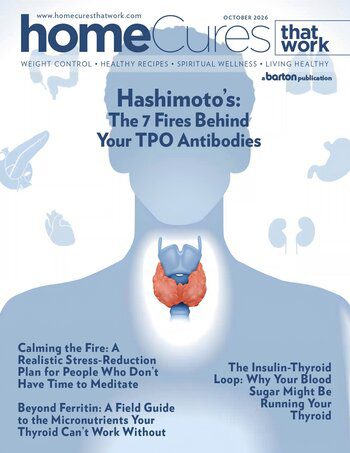
If you are a member of Home Cures That Work, click on the image above to download your monthly issue in PDF format.