


The Insulin-Thyroid Loop: Why Your Blood Sugar Might Be Running Your Thyroid
The test almost nobody orders may explain the antibodies almost nobody can bring down
If you’ve read about the “smoke and fire” model of Hashimoto’s, you already know that faulty TPO enzyme is the mess your immune system is cleaning up, and that antibodies are just evidence of the cleanup. What that model only touches on briefly is one of the biggest, most overlooked sources of that mess: insulin.
Ask most Hashimoto’s patients when they last had a fasting insulin test, and the answer is usually never. Their doctor checked TSH, maybe free T4, maybe TPO antibodies. Blood sugar looked “normal.” Nobody looked any further. And yet insulin resistance may be one of the most fixable drivers of antibody production in the entire disease process.A Relationship That Runs Both Ways
Hashimoto’s and insulin resistance aren’t just two conditions that happen to show up in the same patient. They actively feed each other, in both directions.
An underactive thyroid slows the rate at which cells clear glucose from the blood and reduces the number of insulin receptors on the cell surface, so the pancreas has to release more insulin to do the same job. That’s insulin resistance, caused directly by low thyroid hormone.
Run the loop the other way and it gets worse: elevated insulin acts as a growth signal on thyroid tissue, and it appears to upregulate the very enzyme at the center of the smoke-and-fire story — TPO. More insulin, more TPO activity, more faulty enzyme produced, more cleanup required, more antibodies. Each condition quietly makes the other one worse, which is why so many Hashimoto’s patients feel like they’re fighting on two fronts without realizing it’s really one front.
Why “Normal Blood Sugar” Doesn’t Mean No Insulin Resistance
This is the part that trips up even attentive patients. You can have a completely unremarkable fasting glucose and HbA1c and still be significantly insulin resistant — because your pancreas is compensating by pumping out far more insulin than it should need to. The glucose number looks fine. The insulin number tells the real story.
That’s why fasting insulin, not just glucose, belongs on every Hashimoto’s lab panel. A simple calculation called HOMA-IR (fasting glucose × fasting insulin, divided by a constant) gives a rough insulin-sensitivity score from those two numbers, and it’s often the first clue that something is driving the antibody response before glucose ever becomes a visible problem.
What to ask your doctor for
Fasting insulin, fasting glucose, HbA1c, and C-peptide, drawn together after an overnight fast. Ask for the actual number, not just “normal” — insulin in the double digits (µIU/mL) is a flag even when glucose looks fine.
The Fat Tissue Problem
Excess body fat, particularly around the abdomen, isn’t inert storage. It behaves like an endocrine organ, releasing inflammatory signaling molecules that raise the body’s overall oxidative burden and, crucially, suppress the regulatory T-cells that are supposed to keep autoimmune activity in check.
That’s the mechanism behind an observation many practitioners notice anecdotally and patients notice personally: people who lose weight and improve their blood sugar often see their antibody titers fall, even without any change to their thyroid medication or supplement routine. It isn’t magic. It’s fewer growth signals reaching the thyroid, less oxidative damage to TPO, and a partially restored set of immune brakes.
A Practical Protocol
You don’t need a perfect diet or a six-pack to move the needle here. You need a handful of changes that consistently lower circulating insulin.
- Front-load protein and fiber at meals, and put carbohydrates at the end of the meal rather than the start — this measurably blunts the insulin spike.
- Walk for 10–15 minutes after eating. Muscle contraction pulls glucose out of the bloodstream without needing extra insulin to do it.
- Build and maintain muscle mass through resistance training two to three times a week. Muscle is the body’s largest glucose reservoir; more of it means the same meal requires less insulin.
- Watch the “healthy snack” trap — dried fruit, granola, smoothies, and gluten-free packaged foods are often faster-acting on blood sugar than the foods they replaced.
- Consider a continuous glucose monitor for two to four weeks, even without diabetes. Seeing your own glucose curve after specific meals is often the fastest way to change behavior.
Worth knowing
Barton’s CinnaChroma pairs cinnamon bark extract and chromium picolinate — both studied for insulin sensitivity — with vanadium, selenium, vitamin D3, and vitamin K2. If insulin resistance is part of your picture, it’s a reasonable place to start alongside the changes above; it isn’t a substitute for testing your fasting insulin and tracking it over time.
What Progress Looks Like
Improvement here is slow and shows up in a stack of numbers over months, not days: fasting insulin trending down, HOMA-IR improving, waist circumference shrinking even if the scale barely moves, and — six to twelve months in — TPO antibodies drifting downward. None of these move in a straight line, and a single lab draw can be misleading. Look at the trend, not the point.
The Bottom Line
If you’ve addressed cofactors and iodine and you’re still watching high antibody titers with no clear explanation, ask for a fasting insulin test before you ask for a higher dose of anything else. For a meaningful subset of Hashimoto’s patients, the fire under the TPO problem isn’t a missing nutrient at all — it’s a blood sugar system working overtime, and it’s one of the more direct levers you have.




Featured Sponsor






Latest Home Cures That Work Issue
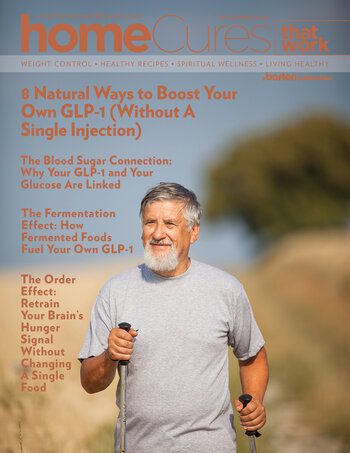
If you are a member of Home Cures That Work, click on the image above to download your monthly issue in PDF format.