

Hashimoto’s: Why Your Immune System Is Attacking Your Thyroid
Most thyroid patients are told they have a “hormone problem.” The truth is more complicated and more fixable than that.
If you’ve been diagnosed with hypothyroidism, there’s a good chance no one told you why your thyroid stopped working. You were handed a prescription for levothyroxine, told your TSH was high, and sent on your way. But for most people in the developed world, the real diagnosis isn’t a sluggish thyroid , it’s Hashimoto’s thyroiditis, an autoimmune disease in which your own immune system is the aggressor.
Understanding this distinction changes everything about how you approach treatment, nutrition, and long-term recovery.
What Is Hashimoto’s Thyroiditis?
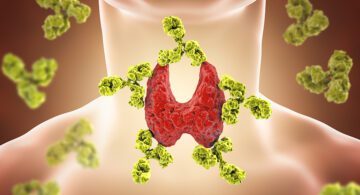
Hashimoto’s is an autoimmune condition in which the immune system produces antibodies that attack the thyroid gland.
Over time, this immune assault damages the cells that produce thyroid hormones, leading to progressively lower output — and all the symptoms that come with it:
- Fatigue
- Brain fog
- Weight gain
- Cold intolerance
- Hair loss
- Depression
- Constipation
Hashimoto’s is now the leading cause of hypothyroidism in developed countries. It affects women 7–10 times more often than men and can appear at any age, though it is most common in women between 30 and 50.
Standard diagnosis relies on blood tests showing elevated:
- TPO antibodies (thyroid peroxidase antibodies)
- Anti-thyroglobulin antibodies
These are markers of immune activity directed at the thyroid. Many practitioners never order these tests, choosing to manage the TSH number alone. That’s like treating a fire by complaining about the smoke.
The Immune System Is the Story — Not the Thyroid
Here is the critical distinction most conventional care misses: In Hashimoto’s, the thyroid isn’t broken on its own.
The immune system is broken, and the thyroid is the casualty. This means giving more thyroid hormone — while sometimes necessary to manage symptoms — does nothing to stop the underlying attack. The antibodies keep climbing. The gland keeps taking damage. And the patient is left wondering why they still feel terrible on medication.
A better question is:
Why is the immune system misfiring in the first place?
Research and clinical experience consistently point to several root causes.
1. Gut Permeability (“Leaky Gut”)
When the intestinal lining becomes porous, partially digested food proteins and bacterial fragments escape into the bloodstream, triggering widespread immune activation. This is one of the most well-documented upstream drivers of autoimmune disease.
2. Epstein-Barr Virus (EBV) Reactivation
Chronic or reactivated EBV has a strong association with Hashimoto’s. The immune system’s attempt to fight the virus may result in misdirected antibody production against thyroid tissue.
3. Vitamin D Deficiency
Vitamin D is a critical immune regulator. Deficiency is linked to many autoimmune conditions, including Hashimoto’s, and is extremely common in modern indoor lifestyles.
4. Chronic Stress & Cortisol Dysregulation
Elevated cortisol disrupts the balance of Th1 and Th2 immune pathways, creating conditions favorable to autoimmune activity.
5. Environmental Toxins
PFAS (“forever chemicals”), BPA, pesticides, and halides like fluoride and bromide can disrupt immune balance and interfere with thyroid physiology.
6. Gluten Sensitivity
Molecular mimicry between gliadin (a protein in wheat) and thyroid tissue proteins is a documented mechanism in Hashimoto’s. Many patients see antibody levels drop on a gluten-free diet.
The Gut-Thyroid Axis: A Closer Look
Of all the root-cause drivers, gut health deserves special attention because it is both profoundly impactful and profoundly under-addressed in standard thyroid care. Approximately 70–80% of the immune system lives in and around the gut. The intestinal lining acts as a barrier between the outside world (food, bacteria, toxins) and your bloodstream. When that barrier breaks down — from processed food, glyphosate, NSAIDs, stress, or antibiotic overuse — undigested particles slip through. The immune system encounters these fragments and mounts a defense. In genetically susceptible individuals, that defense can become misdirected at self-tissue, including the thyroid.
There’s also a direct hormonal connection. The gut microbiome helps with the conversion and recycling of thyroid hormones. Healthy gut bacteria help deconjugate T3, returning it to circulation. A disrupted microbiome can impair this process, contributing to low T3 even when thyroid output appears adequate. Research also shows people with hypothyroidism have a significantly increased risk of small intestinal bacterial overgrowth (SIBO).
Symptoms may include:
- Bloating
- Gas
- Fatigue
- Nutrient malabsorption
The thyroid-gut relationship runs in both directions.
Symptoms That Go Beyond the Thyroid
Because Hashimoto’s is a systemic autoimmune condition, symptoms often extend far beyond simple hypothyroidism.
Many patients live with symptoms no single specialist seems to connect:
- Debilitating fatigue that doesn’t improve with rest
- Brain fog and poor concentration
- Anxiety and depression
- Joint pain and muscle aches
- Digestive issues (bloating, constipation, IBS)
- Skin problems (dryness, eczema, hives)
- Weight gain resistant to diet and exercise
- Hair thinning, especially outer eyebrows
- Cold sensitivity or temperature swings
- Heart palpitations during flares
If your labs are “normal” while these symptoms persist, Hashimoto’s may not have been fully investigated.
What a Complete Evaluation Should Include
| Test | What It Reveals |
|---|---|
| TSH, Free T4, Free T3 | Full thyroid hormone picture |
| Reverse T3 | Functional hypothyroidism at cellular level |
| TPO Antibodies | Immune attack on thyroid enzyme |
| Anti-Thyroglobulin Antibodies | Secondary autoimmune marker |
| Vitamin D (25-OH) | Immune regulation status |
| Iron / Ferritin | Needed for thyroid hormone production |
| Selenium | Supports T4 → T3 conversion |
| Cortisol (AM) | Adrenal stress and immune imbalance |
| GI MAP / Stool Test | Gut flora, pathogens, leaky gut markers |
A Root-Cause Approach to Hashimoto’s
Because Hashimoto’s is driven by immune dysfunction — not just hormone deficiency — effective management requires addressing the terrain, not just the thyroid.
1. Repair the Gut
Restoring intestinal integrity is one of the most powerful interventions in autoimmune thyroid care.
This includes removing gut irritants such as:
- Gluten
- Processed foods
- NSAIDs
Support tools may include:
- L-glutamine
- Zinc carnosine
- Probiotics
- Digestive enzymes
2. Correct Key Nutrient Deficiencies
Selenium (200 mcg/day as selenomethionine) is especially important.
It helps:
- Support T4 → T3 conversion
- Reduce TPO antibodies
- Protect the thyroid from oxidative stress
Vitamin D, zinc, iron, iodine, and magnesium should also be assessed and corrected based on labs.
3. Calm the Immune System
Anti-inflammatory nutrition is foundational.
Reduce:
- Processed foods
- Sugar
- Seed oils
Supportive lifestyle changes include:
- Quality sleep
- Daily sunlight exposure
- Stress management
- Nervous system regulation
Stress reduction is not optional — cortisol dysregulation actively fuels autoimmunity.
4. Reduce Toxic Burden
Reduce exposure to:
- Fluoride
- Bromide
- Chlorine
- PFAS
- BPA
- Phthalates
Practical starting points:
- Filter water
- Reduce plastic food contact
- Eat whole foods
Supporting Your Gut to Support Your Thyroid
If gut health is central to Hashimoto’s, supporting the gut becomes non-negotiable.
Barton Nutrition’s Healthy Gut Restore was formulated to support:
- Digestive enzyme function
- Microbiome balance
- Gut lining repair
For people navigating Hashimoto’s, gut support isn’t just helpful.
It’s often where recovery begins.
→ Learn more at bartonsupplements.com
Can Hashimoto’s Be Reversed?
Short answer:
Antibody levels can often be significantly reduced. Symptoms can go into remission.
In some cases, medication can even be reduced or eliminated when root causes are properly addressed.
The thyroid may not fully regenerate if extensive damage has occurred.
But the immune attack can often be quieted.
This requires treating the person, not just the lab value.
That means:
- Repairing the gut
- Correcting nutrient deficiencies
- Reducing inflammation
- Lowering toxic burden
This path is more demanding than simply taking a pill and rechecking TSH in six months.
But for many Hashimoto’s patients, it’s the only path that leads to lasting improvement.
The Bottom Line
Hashimoto’s thyroiditis is not a thyroid problem with an immune footnote.
It is an immune problem that has targeted the thyroid.
Effective care means building a strategy from the inside out:
- Gut integrity
- Immune balance
- Targeted nutrition
- Reduced inflammatory burden
The thyroid cannot heal in a body that is still attacking it.
But when the immune system gets what it needs — a repaired gut, the right nutrients, a lower toxic load, and a less inflamed internal environment — the attack often begins to quiet.
That’s when real recovery becomes possible.
These statements have not been evaluated by the Food and Drug Administration. This product is not intended to diagnose, treat, cure, or prevent any disease. This article is for informational purposes only and does not constitute medical advice. Always consult a qualified healthcare provider before making changes to your health regimen.



Featured Sponsor





Latest Home Cures That Work Issue
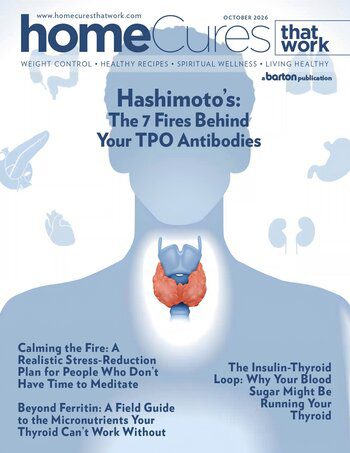
If you are a member of Home Cures That Work, click on the image above to download your monthly issue in PDF format.