
February 5, 2012

GERD: The Burning Within

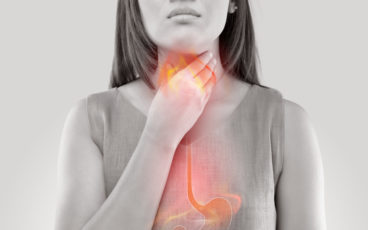
Heartburn, indigestion, acid stomach, reflux… There are many terms for the burning in the esophagus that is common to all, at least occasionally.  From historical records, it appears that gastro-esophageal reflux disease, or GERD, has been a problem for mankind from the beginning.  Many remedies have been used over the centuries, some were even highly toxic.

Currently, medications for GERD are among the most-sold drugs in the world.  The most recent drugs completely block acid in the stomach.  They often work, but at the same time they inhibit the absorption of minerals, such as calcium and magnesium, and have been shown to cause osteoporosis when used on a long-term basis.  They also block the absorption of vitamin B-12, which leads to nervous disorders.

Many don’t want to take drugs forever so they opt for surgery, called a fundoplication.  This can work, but is really successful less than half the time.

Because of these problems, many people ask me if there is anything that can be done without drugs or surgery to treat and relieve GERD.  The following is my list; it is almost always successful in my patients...


Please sign in at the right or subscribe to read the rest of this article...


Your Acid Reflux Is Not Really A Drug Deficiency

Gastroesophageal reflux (GER) affects 20% of people in the United States. Despite this prevalence, its diagnosis is challenging because of the difficulty doctors have even defining the disease.

When exposure to caustic digestive juices erodes your Lower Esophageal Sphincter (LES), a variety of symptoms inevitably appear, such as chronic heartburn and regurgitation. If the symptoms increase, diagnostic testing may verify gastroesophageal reflux “disease” (GERD), leading to surgical therapy.

NOT a pretty picture.

Did you know if you experience acid reflux just twice a week, you might already have gastroesophageal reflux disease (GERD)? At least, that’s what your pharmacist may tell you.

Based on 1985 statistics, between 3-7% of the population in the USA suffer from “GERD and related esophageal disorders.” Digestive diseases in the United States: Epidemiology and Impact – NIH Publication No. 94-1447, NIDDK, 1994

Millions of people who suffer from acid reflux or GERD symptoms use over-the-counter (OTC) acid-reducing agents called antacids, or anti-secretory drugs such as H3 blockers and proton pump inhibitors, assuming they need them.

  • Common antacids include: Alka-Seltzer, Maalox, Mylanta, Pepto-Bismol, Riopan and Rolaids.
  • Common H2 blockers are: cimetidine (Tagamet HB), famotidine (Pepcid AC), nizatidine (Axid AR) and ranitidine (Zantac 75).
  • Common proton pump inhibitors are: esomeprazole (Nexium), lansoprazole (Prevacid), omeprazole (Prilosec, Zegerid), pantoprazole (Protonix) and rabeprazole (Aciphex).

It’s very important that if you do have GERD symptoms you should consult with a qualified health practitioner. However, it doesn’t mean you have to accept a life sentence of taking harmful OTC and prescriptive drugs that will never cure your acid reflux or GERD and sometimes even make it worse.

Fact is if GERD is left uncured over time, it can lead to complications such as a bleeding ulcer and scars from tissue damage, which can lead to a narrowed esophagus (stricture) making swallowing more difficult. GERD may also cause hoarseness, chronic cough, and conditions such as bad breath or even asthma.

Just remember your acid reflux or GERD is NOT a drug deficiency. There are effective, safe and affordable alternatives readily available to you.

Read on to learn more.

The Shocking Truth About Acid Indigestion Revealed

Contrary to the common excuse given for acid reflex, gastroesophageal reflux and GERD are RARELY caused from...


Please sign in at the right or subscribe to read the rest of this article...